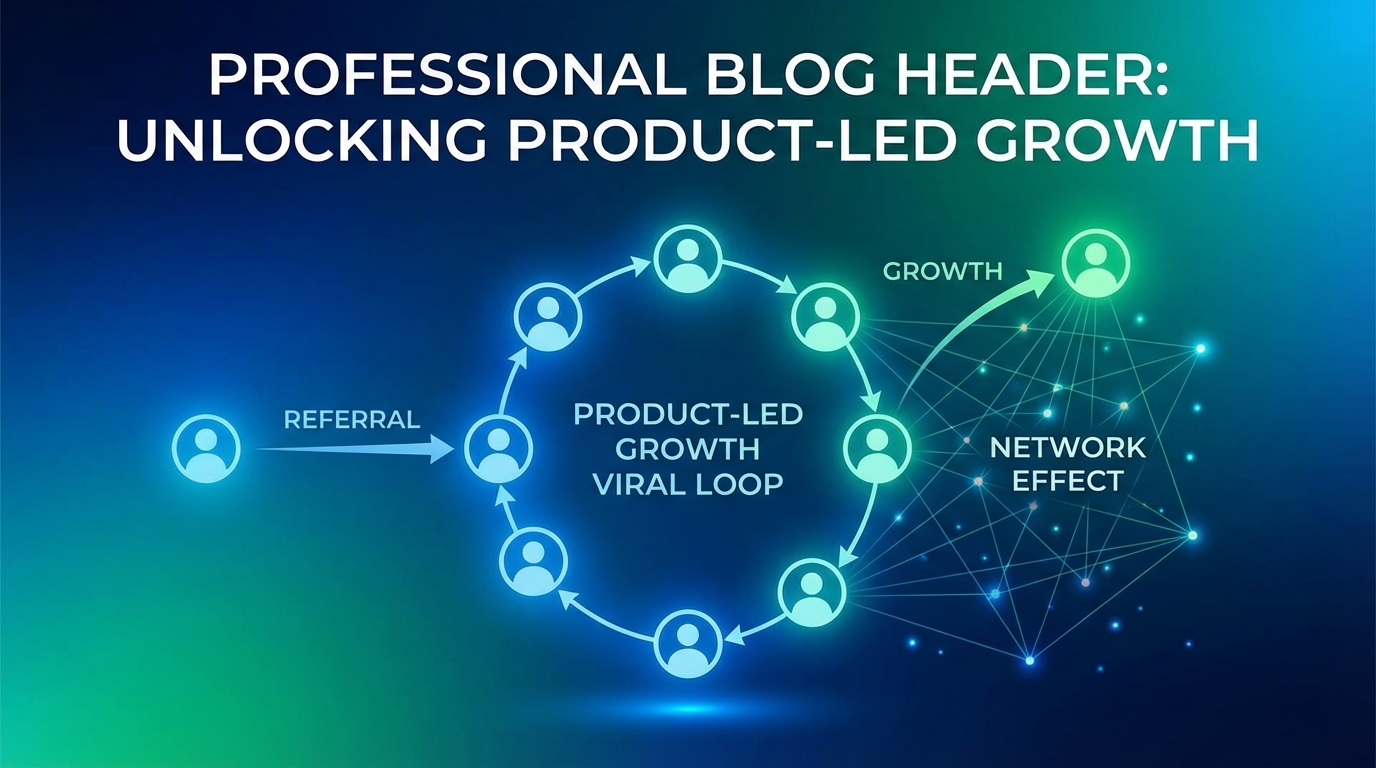
Product-Led Growth: Building Viral Loops Through User Feedback
Turn satisfied users into growth engines by integrating feedback loops that drive referrals, word-of-mouth, and organic expansion. PLG meets voice of customer.
Summary
Product-led growth (PLG) depends on users loving your product enough to spread it. But most companies treat feedback collection and growth loops as separate initiatives. When integrated, feedback becomes fuel for viral expansion: it identifies promoters, captures shareable moments, removes friction from referrals, and turns happy users into your best acquisition channel. This guide covers how to build feedback-powered viral loops that accelerate PLG.
The Feedback-Growth Connection
User feedback isn't just for product improvement—it's a growth lever.
How Feedback Drives Growth
Feedback systems touch users at high-engagement moments:
- After successful outcomes (peak satisfaction)
- When evaluating experience (reflective mindset)
- During milestone achievements (celebration mode)
These are exactly the moments when users are most likely to share.
The Missed Growth Opportunity
Most feedback flows look like this:
[User has great experience] → [Survey asks for rating] → [Rating stored] → [End]
Growth-integrated feedback looks like this:
[User has great experience] → [Survey asks for rating] → [High rating detected]
    ↓
[Immediate prompt: "Share this with a colleague who'd benefit?"]
    ↓
[Easy sharing mechanism + incentive]
    ↓
[New user acquisition]
The satisfied user goes from data point to growth driver.
Identifying Growth-Ready Users
Not every user is ready to drive growth. Target the right ones.
The Promoter Identification Framework
Layer signals to find true promoters:
| Signal Type | Example | Growth Readiness |
|---|---|---|
| Explicit satisfaction | NPS 9-10 | Very high |
| Feature advocacy | Shared a workspace | High |
| Milestone achievement | Completed major goal | High |
| Consistent engagement | Daily active for 30+ days | Moderate |
| Positive feedback | Praise in survey response | High |
| Support appreciation | Thanked support team | Moderate |
Timing the Growth Ask
Ask for growth actions at peak moments:
High-opportunity moments:
- Immediately after NPS 9-10 rating
- Right after completing significant milestone
- When user first invites a teammate
- After support resolved an issue positively
- When usage reaches power-user thresholds
Low-opportunity moments:
- During onboarding (too early)
- When sentiment is unknown
- During billing or admin tasks
- When user is experiencing friction
Segmenting Promoter Types
Different promoters drive different growth:
Internal promoters:
- Expand usage within their organization
- Invite teammates and departments
- Growth mechanism: Team expansion, seat upgrades
External promoters:
- Tell peers at other companies
- Share on social, at conferences, in communities
- Growth mechanism: Referrals, word-of-mouth
Content promoters:
- Write about their experience
- Create case studies, blog posts, reviews
- Growth mechanism: SEO, social proof, earned media
Building Feedback-Powered Growth Loops
Design loops where feedback triggers growth actions.
The NPS-to-Referral Loop
Most direct feedback-to-growth mechanism:
[NPS Survey Shown]
    ↓
[User Rates 9-10]
    ↓
[Immediate Follow-up]
"Thanks! Know someone who'd benefit from [Product]?
Share your unique link and you both get [incentive]."
    ↓
[One-Click Share Options]
    ↓
[Friend Signs Up via Link]
    ↓
[Both Rewarded]
    ↓
[New User Enters Onboarding]
Key elements:
- Zero friction between rating and share prompt
- Clear incentive for both parties
- Easy sharing (pre-populated message, copy link)
- Tracking to attribute and reward
The Milestone Celebration Loop
Leverage achievement moments:
[User Completes Milestone]
    ↓
[Celebration Screen]
"You just saved 100 hours with [Product]! 🎉"
    ↓
[Share Achievement]
"Show your network what you've accomplished"
    ↓
[Shareable Achievement Card]
(Pre-designed social image with stats)
    ↓
[Social Post Drives Awareness]
Key elements:
- Celebrate genuinely first (not just extracting value)
- Make achievement shareable (visual, specific, impressive)
- Include product attribution naturally
- Track shares and resulting signups
The Testimonial-to-Case-Study Loop
Turn positive feedback into content:
[Positive Feedback Received]
    ↓
[AI Identifies High-Quality Response]
    ↓
[Follow-up Ask]
"Your feedback was great! Would you be open to
a brief interview for a case study?"
    ↓
[Interview Conducted]
    ↓
[Case Study Published]
    ↓
[User Shares Case Study]
(They're featured, they share it)
    ↓
[SEO + Social + Referral Traffic]
The Support Gratitude Loop
Positive support experiences create advocates:
[Support Ticket Resolved Successfully]
    ↓
[Satisfaction Survey: "How was your support experience?"]
    ↓
[High Rating Received]
    ↓
[Follow-up]
"So glad we could help! If you have a minute,
a quick review would help others find great support too."
    ↓
[Link to G2/Capterra/TrustRadius]
    ↓
[Review Posted]
    ↓
[SEO + Trust Signals for Prospects]
Reducing Friction in Growth Actions
Every friction point loses potential growth.
The One-Click Principle
Make growth actions nearly effortless:
Bad UX:
- User gives positive rating
- Modal asks "Would you like to refer?"
- User clicks yes
- Taken to referral page
- Must enter friend's email
- Must write a message
- Clicks send
Good UX:
- User gives positive rating
- Modal shows pre-populated share options
- One click copies link or opens share dialog
- Done
Pre-Populated Sharing
Do the work for users:
Pre-written referral messages:
"I've been using [Product] and it's saved me [benefit].
Thought you might find it useful too: [personalized link]"
Shareable achievement graphics:
- Auto-generated based on user data
- Branded but not obnoxious
- Contains compelling stat or milestone
One-click channel options:
- Copy link
- Email (opens client with pre-filled message)
- Slack (if B2B)
Embedded Sharing in Product
Build sharing into natural workflows:
Workspace invites:
- Invite teammates as part of normal use
- Not a separate "referral" action
- Growth happens through product utility
Exportable content:
- Reports, summaries, visualizations
- Naturally include product branding
- Users share output → recipients see product
Collaborative features:
- Shared workspaces with external users
- Guest access for stakeholders
- Product exposure through collaboration
Incentive Design
Incentives can accelerate or distort growth.
Incentive Types
No incentive:
- Relies on pure satisfaction
- Highest quality referrals
- Lowest conversion rates
Monetary incentives:
- Credits, discounts, cash
- Highest conversion rates
- Risk of gaming and low-quality referrals
Feature incentives:
- Unlock premium features for referrals
- Good balance of motivation and quality
- Aligns with product value
Status incentives:
- Badges, recognition, leaderboards
- Appeals to certain user types
- Low cost, can drive engagement
Two-Sided Incentives
Both referrer and referee should benefit:
Referrer gets:
- Credit, discount, or feature unlock
- Recognition or status
Referee gets:
- Extended trial
- Discount on first payment
- Additional features
Why two-sided works:
- Referrer doesn't feel like they're "selling" friends
- Referee has reason to use the link
- Both parties win
Incentive Anti-Patterns
Too generous:
- Attracts referral hunters, not users
- Creates users with no intent to pay
Referrer-only:
- Feels exploitative
- Awkward for referrer to share
Complicated:
- Multi-tier, points systems
- Reduces participation
Delayed:
- Rewards given too late
- Breaks connection between action and reward
Measuring Feedback-Driven Growth
Track the connection between feedback and growth outcomes.
Key Metrics
Feedback-to-share conversion:
- What % of high-rating users share/refer?
- Target: 5-15% of promoters take growth action
Share-to-signup conversion:
- What % of shares result in new signups?
- Target: 10-30% (varies by incentive)
Referred user quality:
- How do referred users compare to other channels?
- Retention, conversion, LTV
Viral coefficient:
- New users per existing user
- K > 1 means viral growth
Attribution Tracking
Ensure you can connect the dots:
Track:
- Which feedback response led to share
- Which share led to signup
- Which signup converted and retained
Implement:
- Unique referral links per user
- UTM parameters for channel tracking
- Attribution models for multi-touch journeys
Cohort Analysis
Compare growth loop participants:
| Cohort | Signup Source | Conversion | 90-Day Retention | LTV |
|---|---|---|---|---|
| Organic | Direct | 4.2% | 45% | $340 |
| Paid | Ads | 3.8% | 38% | $290 |
| Referred | Referral loop | 5.1% | 52% | $420 |
Referred users often outperform—they come with context and trust.
Closing the Loop: Feedback from Referred Users
The loop continues with new users.
Referred User Experience
New users from referrals should know:
- Who referred them (social connection)
- What to expect (set by referrer's experience)
- How to get started (accelerated onboarding)
Capturing Referral Quality Signals
Track feedback from referred users:
- Did referrer's description match reality?
- Are referred users satisfied?
- Would they refer others?
Use this to:
- Identify best referrers (quality referrals)
- Refine referral messaging
- Close bad referral loops
Multi-Generation Loops
The best loops propagate:
User A (satisfied) → Refers User B → User B (satisfied) → Refers User C → ...
Track generational depth:
- How many "generations" does your loop reach?
- What's the decay rate at each generation?
- Can you improve to extend the chain?
Advanced Techniques
Predictive Promoter Scoring
Don't wait for feedback—predict promoters:
Signals that predict promotion:
- Usage patterns
- Feature adoption
- Engagement trends
- Historical referral behavior
Build scores that identify likely promoters before they're asked.
Personalized Growth Asks
Tailor asks based on user data:
For internal-focus users: "Your team could benefit from [Product] too. Invite them and get [benefit]."
For external-influence users: "Know others in [industry] who'd find this useful? Share and earn [reward]."
For content-creator types: "Want to write about your experience? We'll feature you on our blog."
Viral Feature Design
Some features are inherently viral:
Collaboration features:
- User invites others to collaborate
- New user discovers product through use
Output features:
- User creates shareable content
- Content includes product branding
Integration features:
- Product connects to user's workflow tools
- Exposure through daily use
Design features with growth loops built in.
Common Pitfalls
Asking Too Soon
Users who haven't experienced value won't promote:
- Wait for meaningful engagement
- Ensure satisfaction signals before growth asks
- Premature asks damage trust
Optimizing for Vanity Metrics
Shares ≠ signups ≠ conversions ≠ revenue:
- Track full funnel, not just top
- Quality > quantity in referrals
- LTV matters more than signup count
Ignoring Feedback Quality
Using every positive rating for growth asks:
- Some positives are lukewarm
- Reluctant referrers hurt your brand
- Be selective about who you ask
Breaking Trust
Users who refer expect you to treat their referrals well:
- Bad experience for referee reflects on referrer
- Aggressive sales to referrals damages relationships
- Honor the trust implicit in referrals
Key Takeaways
- Feedback moments are growth moments: High satisfaction + easy sharing = referrals
- Identify true promoters: Layer signals to find users ready to advocate
- Minimize friction: Every step between satisfaction and share loses potential
- Design smart incentives: Two-sided, appropriate value, simple mechanics
- Measure the full funnel: Share → signup → conversion → retention
- Close the loop: Referred users become referrers in healthy loops
User Vibes OS identifies promoters through feedback signals and activates them with automated referral workflows. Learn more.
Related Articles
Turning Happy Users into Advocates: Automating Testimonial Collection
Learn when and how to ask for testimonials, identify your happiest users with AI, and amplify social proof across channels. Convert satisfaction into growth.
Automated Testimonial Collection: Timing and Targeting
Systematically capture testimonials by reaching happy users at the right moment. Build a testimonial engine that runs on autopilot.
Email Drip Campaigns Triggered by User Sentiment
Build smarter nurture sequences that respond to how users actually feel. Use sentiment signals to send the right email at the right moment.
Written by User Vibes OS Team
Published on January 15, 2026